Jeff Russo has written music for several 2025 premieres including series such as Alien: Earth, Zero Day, Untamed, Hostage and feature dramas such as The Last Rodeo and Looking Through Water. We spoke with the composer about his current projects, his collaborations with Noah Hawley and Steven Zaillian, and his rock band, Tonic.
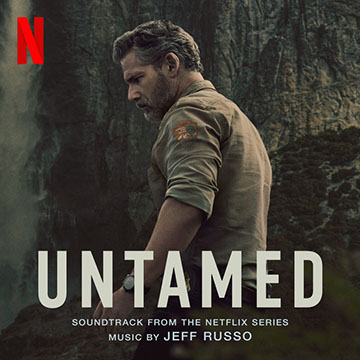 I recently watched the series Untamed. This crime drama set in a magnificent landscape is simultaneously about crime, human bonds and self-blame, which your music perfectly reflects alongside the main actors. How did you approach the work, and what moments do you consider shaped the mood of the score?
That story and that show have much to do with what you feel when standing in the expansive Yosemite National Park. I thought a lot about how to make the location of the show have a voice alongside the drama of the story. The drama of the story certainly has a voice and the crime that was committed also has a voice, but the backdrop on which the story takes place I felt really needed to have a voice as well. I leaned into that with guitar and with the sound of air and wind rustling, the sound of wind chimes, and that kind of thing really helped me sort of create the evocative nature of the score.
The second season was announced at the end of July. Are you expecting to return alongside Eric Bana's character, Kyle Turner?
The second season hasn't been shot yet but when they do end up shooting the second season, I'm certainly hoping they ask me to write the score for it.
Zero Day, which debuted earlier this year, places great emphasis on the protagonists' inner world and human relationships, in addition to crisis management, while The Last Rodeo is at its core a human fate drama. Is the project easier to score when the story is focused not only on the plot but also on the characters' inner world?
That's an interesting question. I think the level of those performances is certainly inspiring. The way the actors portrayed their characters is certainly a point of inspiration for me. These particular projects were really about that “edge-of-your-seat” feeling you get when watching high-octane dramas.
The thriller aspect of it – the not knowing what's going to come next or how they're going to figure out the next part of the puzzle. The next part of the puzzle is the thing that keeps your pulse racing. I took a lot of inspiration from that feeling and tried to implement it in the score.
 One of your recent works is Alien: Earth, which is part of an iconic franchise. When were you first approached with this project, and how much time did you have to complete it?
I spent a lot of time on it – about four years.
Four years?
Yeah. I started the writing around 2021. I worked on themes and ideas for what the show was going to sound like and it just kept evolving over time. They didn't start shooting until about two years ago.There was a lot of work on the show that I did prior to them shooting. I had just read scripts and started writing music based on what the scripts were doing.
It's definitely a tall order stepping into the shoes of such iconic material. Jerry Goldsmith wrote the score for the first movie, James Horner did the second and Elliot Goldenthal did the third so, there's this idea of there being such big shoes to fill. It is quite terrifying. At the same time, I kind of have to keep blinders on: while paying homage to what came before, expanding on it and bringing it into a more modern, new version of that, so we can have our own unique sound.
"The music is the heart of any narrative" – you said this regarding Alien: Earth, to which (according to your words) you gave a special heart. You wrote new themes, created your own alien-world and parallel with this, you made references to previous Alien-scores. As an Alien fan, I appreciate your combination.
Thank you.
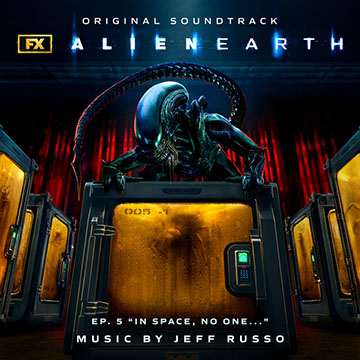 Several genres are featured within Alien: Earth. There are thriller elements, as well as action, sci-fi, and emotional elements. Did you develop these components simultaneously or did you start in a specific line (for example the horror thread, or Wendy's character) and then add the other elements?
I began thinking about the characters as I was reading the script: what they’re feeling. I really started there. One of the very first themes that I wrote was Wendy's theme. Sitting in front of my piano, thinking about what the melody might be, and finally writing it on the piano. Then I started thinking of it in terms of what the whole show would sound like, and I sort of built it out from there. But I always start with the character.
You've previously worked with the Alien: Earth creator Noah Hawley on Fargo, Lucy in the Sky, The Unusuals and Legion. Can you tell us about your first meeting?
I met Noah when he was doing his very first show which was called The Unusuals back in 2009. We had a meeting and we got on really well because we had a lot of the same musical tastes. He hired me to do that show and that was sort of the beginning of our creative collaboration. It has gone on now for about 15 years.
It's very interesting because we have a back-and-forth, and I think I understand his storytelling technique – like how he likes to tell a story and how he likes to use music. Knowing that makes it a little easier for me to write music that will work for a particular project for him.
Can you tell us a little about your collaboration? Did Hawley give you a free hand? What kind of instructions does he usually give you?
It's a real collaboration. There is no such thing as a free hand. There is a back-and-forth. So he does have an idea of how he likes a particular story to feel.
For example, in the case of Alien: Earth, he sent me an email, a very long email that was talking very specifically about how he wanted the world to feel, how he wanted this character to feel. He talked about Hermit feeling lonely. He talked about Wendy feeling torn and having trouble understanding the difference between humanity and synthetics, because she was transitioned from being human into a synthetic body. And we talk about the way he wanted the world that he was building to feel and what he wanted the xenomorphs to sound like. He sent me descriptions of things that he wanted to feel a certain way, and I took that and utilized I was writing the score.
And what’s the situation with the temporary music? Did you use it during your discussions? What's your opinion generally about the temp musics: they are useful or not?
Well, we don't use temp with Noah, as he doesn't typically use temp music. I write a bunch of music that he starts putting into the cut right away. So the temp is typically mine: we review it and see how it's working and see if we can make it better or see if we can make changes to see if he is getting what he wants. But with Noah, there's typically no temp music.
In other cases, temp music can be very useful. It can be a roadmap that is, you know, drawn by someone who doesn't understand how to speak music. So, the only way they can really communicate about music is by using music. And that can be very helpful. There's a very fine line between it being useful and it being a crutch and then getting too connected to it and then wanting to get closer and closer and closer to the temp music. It is a balance that needs to be struck.
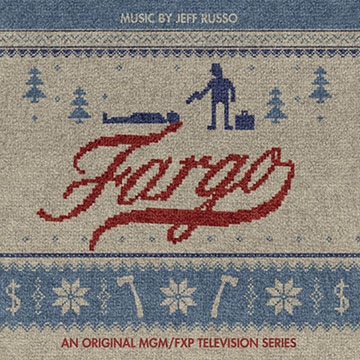 The biggest success was Fargo, for which you also received a Primetime Emmy. Congratulations on this award.
Thank you.
Each new season of the Fargo anthology is set in a different time period and has a different cast but a similar mood and elements of style. If I remember correctly, this kind of structure required more themes from you than average but also gave you greater freedom. Do I see this correctly?
Yeah, I think the fact that we have to reinvent the story every year, or every season, means I have to reinvent thematic material for every new season. There are a couple of things that stay. Our main theme stays and we played with that. There’s a couple of other themes that have made it from season one all the way to season five. There's this rhythm that I used in season one that has made it through all seasons of Fargo. We kind of look at it like the bad guy theme or the evil theme – that drumbeat that's played in a number of different ways.
The fact that we get to reinvent the thematic material every year does sort of make it freeing for each one of the seasons because we treat each season like its own movie. We treat each season like it's a whole new story and for this reason, I must reinvent myself every year.
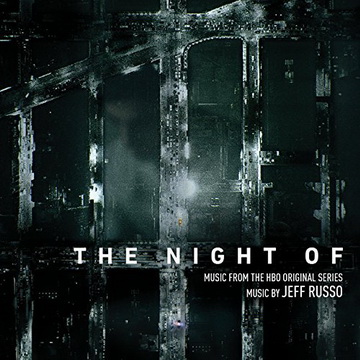 Going back to the importance of collaborations, you recently worked with creator/director Steven Zaillian on Ripley – you had previously worked with him on The Night of. Is it easier to work with a team you’ve already worked in the past? Or is every project a new project?
Every project is a new project. Every time we do something new, it's something new and fresh. We try not to recycle ourselves. I've done two projects with Steve and both were very, very deep and intense projects to work on. The Night of was the first, and then Ripley. Writing the music for Ripley was a very intense process because it’s an intense story.
If my information is correct, you started working on the 2011 miniseries Charlie's Angels but in the end Louis Febre composed the music. Can you tell us what happened? Was that a rejected project?
The director of the project asked me to write the music for the pilot, and I did it. The producers had always wanted Louis, because they typically use him for their projects but he wasn't available to do the pilot so I did the pilot and Louis the rest of the series. I was only ever going to do that first episode.
Let's talk a bit about your film scores. Do you get information about the album's release right away?
We don't really decide to do a soundtrack album until after I'm finished with writing the entire score because sometimes scores don't really need a release because they're not really music that you can listen to on its own. It's really only meant to be played while the narrative is happening and it's not really enjoyable or listenable on its own. There are a lot of one minute-long cues. The way I go about writing Fargo or Alien: Earth or any of these other big projects that I do with this particular filmmaker, Noah Hawley, is I write these big suites of music and then I figure out what the score is based on those suites of music, if that makes any sense.
Some of your scores have been released on CDs and LPs while others are only available digitally. I have a Spotify subscription but I think the physical format is also important. For example, I would like to buy The Last Rodeo (his track, called „End Titles Suite – Orchestra” is magnificent) and Alien: Earth CDs, but they only have digital releases. What do you think about the importance of the physical format? Do you collect albums?
I do but I don't buy CDs anymore. I usually buy vinyl records. We are releasing the Alien: Earth score on vinyl, a limited edition record will be released soon – you can pre-order it now. And it's actually pretty great, there's some really great artwork, and there's a big insert. It's a double album, so it includes most of the music from the full digital release. It's a collector's item and that's what I like. I like to collect vinyls because I have a record player, and I like to listen to music that way. I haven't really listened to CDs in a while. In fact, I don't even have a CD player anymore.
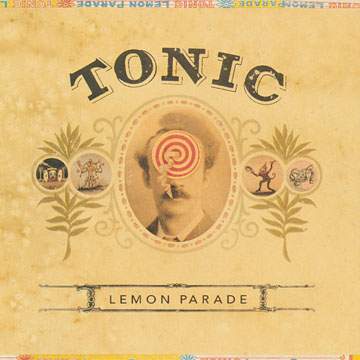 You have two different musician sides. In both cases, you’re a storyteller, but as a composer, the visual sequences help you, while as a guitarist-singer, the lyrics do this. How can you harmonize your composer and Tonic band sides in your daily life?
Well, I think that I look at it in chapters. I look at it in pieces. That was a chapter in my musical life where I started. The first thing that I ever did was start a band and make records and go on tour and play shows and be around doing that. And then at some point, I decided that I needed to do something different. I needed to move out of that space and into a different space and make music for storytelling in a different way.
I do continue to play shows occasionally with the band but not as much as I'd like to. There simply isn't the time, and also, I don't really have the desire to do that as much as I might have before because I'm comfortable sitting in my studio writing music for stories.
The band's songs have also appeared in films like American Pie, Scream 2, and The X-Files: Fight the Future. How did Tonic receive these requests?
Well, I think in those cases, the movies came to us and wanted to use songs that we had already written in their movies. That worked out very nicely for us but we didn't do any of that on purpose. That was by chance.
Your first film music concert was at the Malaga Film Music Festival.
Yes, that was probably the first time that I had ever really performed or had any of my scores performed with a live orchestra. That was a lot of fun.
As a regular stage performer, was it easy for you to prepare for this event?
It was definitely new. I'd never done that before. I'd never conducted in front of people, I'd never conducted an orchestra in that way so, it was pretty terrifying, but it was very thrilling at the same time, because I had done live music before but never in that way.
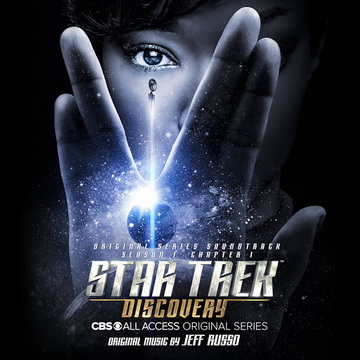 You've been involved in numerous iconic franchises and comic adaptations. While Fargo became a cult classic film you joined the complex universe of Star Trek and Alien. With Legion you delved into the Marvel world and with The Umbrella Academy, you got a taste of Dark Horse comics. Do you usually feel more pressure with such projects?
I think there's a moment where there is a lot of pressure and then you kind of have to forget about it and just do the work. So, yes, there's a moment where you feel that, but generally speaking, I would say you don't. You just have to sit down, look at your keyboard or pencil and paper, and just write and just do it. It's all you can do.
Finally I would like to ask you, what is your favorite work in your career?
It's hard to say, it changes from day to day. I think that I'm most proud of the work I've done on Fargo. I have the most pride in that and Ripley. Those two projects have a very special place in my heart but I don't know that they're my favorites. I think that all of them are my favorite.
To know more about Jeff Russo's work, please visit the composer's official website.
Interview by Laszlo Kulics
Special thanks to Alix Becq-Weinstein
November 23th, 2025
Special thanks to Alix Becq-Weinstein
November 23th, 2025